
Parting line design
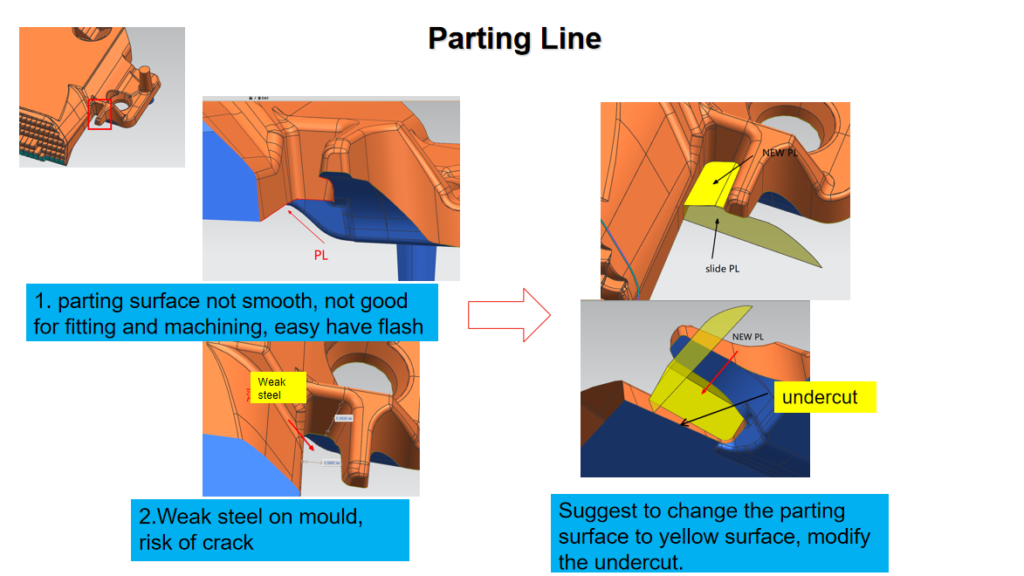
Key considerations for parting line design include avoiding undulation to prevent flash and minimize steps. Incorporate a 0.2mm step mismatch between cavity and core to prevent reverse interference. Sharp edges should be avoided; a 0.5mm radius is recommended for polishing. The parting line must not be placed on functional surfaces, external radii, or Class A surfaces; it should preferably be located on B-surfaces. Additionally, avoid chisel-edge configurations to ensure robust mold construction.
Gate and runner system design
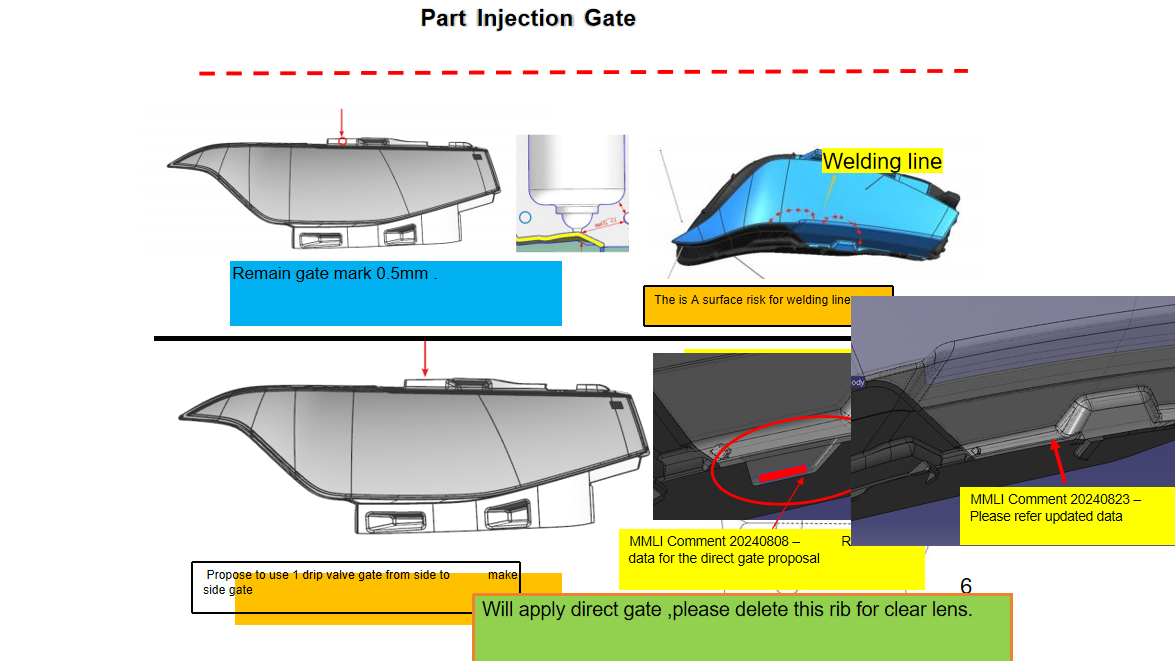
Key points for gate and runner design with valve gates: strategically position gates to ensure balanced flow; utilize sequential valve control to optimize cavity filling and minimize weld lines; select gate size to balance pressure drop and shear rate; design runners for uniform melt distribution; account for material rheology to prevent degradation and ensure consistent part quality.
Flow balance design
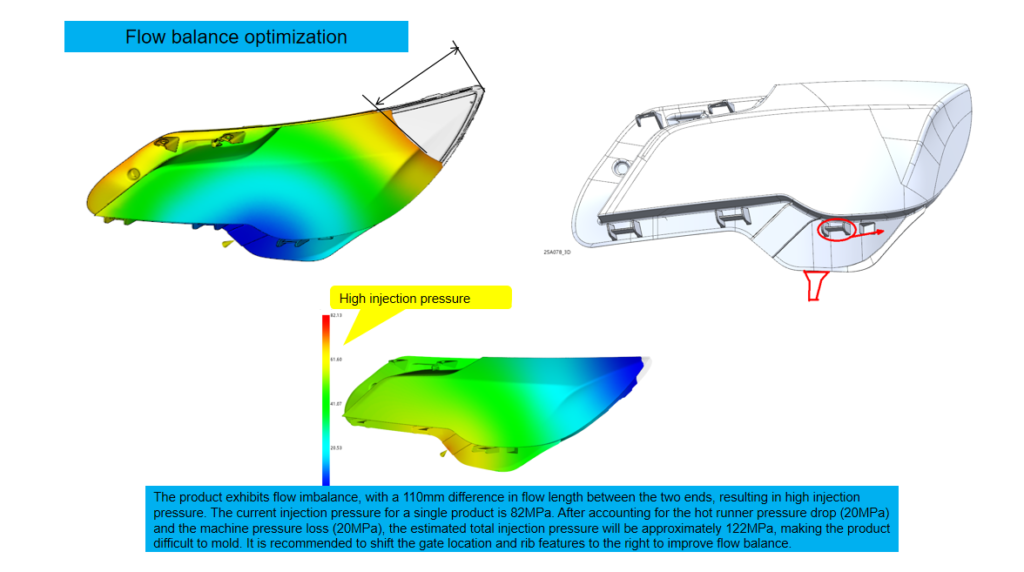
Flow balance optimization focuses on the strategic positioning of gates to ensure simultaneous cavity filling. Key considerations include analyzing melt flow fronts to prevent overpacking or short shots, adjusting gate sizes to control flow rates, and simulating material behavior to minimize pressure loss. Balancing runner diameters and layouts promotes uniform filling, thereby reducing stress and warpage while lowering injection pressure requirements for consistent part quality.
Ejection design
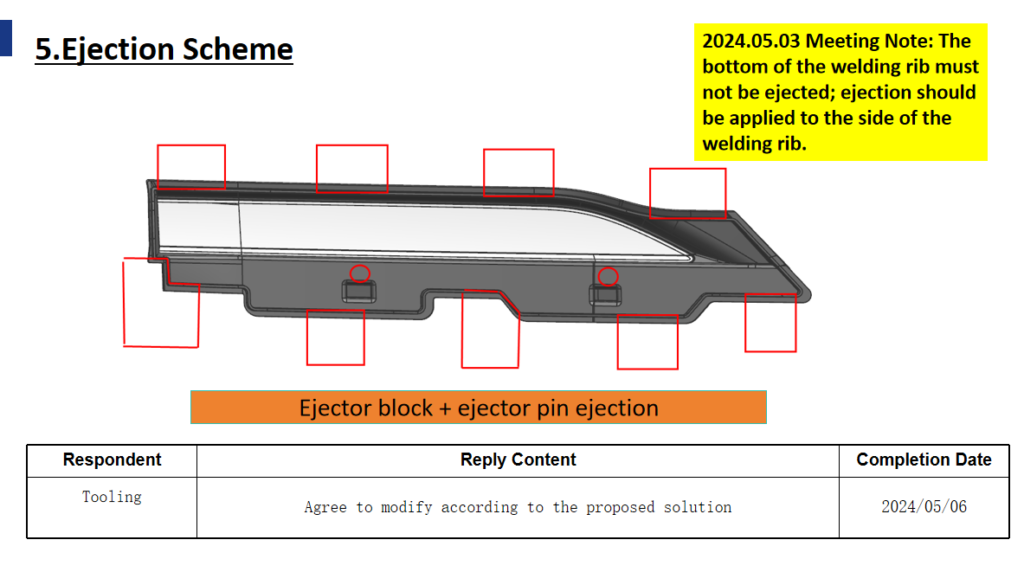
- Position ejector pins on ribs, bosses, or thick sections—avoid functional surfaces.
- Use ejector blocks for large flat areas to prevent deformation.
- Balance ejection force with symmetrical pin layout to avoid part tilting.
- Add sufficient draft angles to reduce ejection resistance.
- Avoid ejecting on weld lines or weak structures.
- Incorporate vacuum breakers on large surfaces to prevent sticking.
Slide design
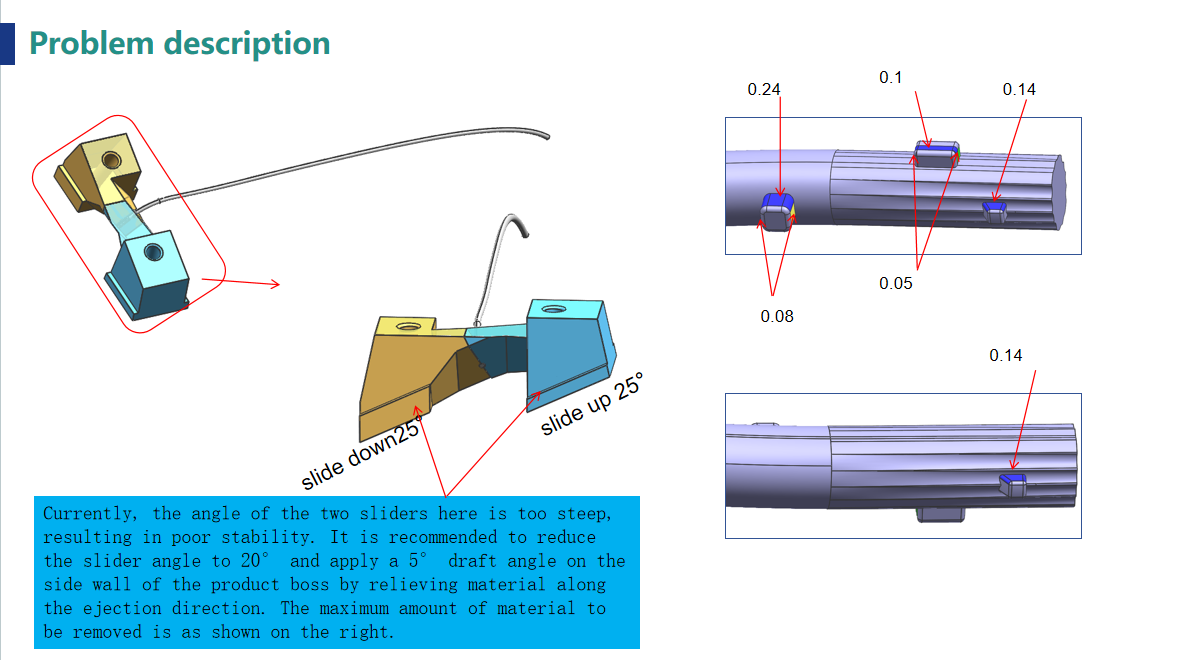
Key considerations for slider design: ensure sufficient travel with 3–5mm safety margin; use angle pins at 15°–25° with 2°–3° clearance; incorporate wedge blocks for locking and ball plungers for positioning; add cooling channels for large sliders; include lubrication grooves and wear plates; avoid sharp corners; provide vents; install limit switches for automation.
Material flashing design
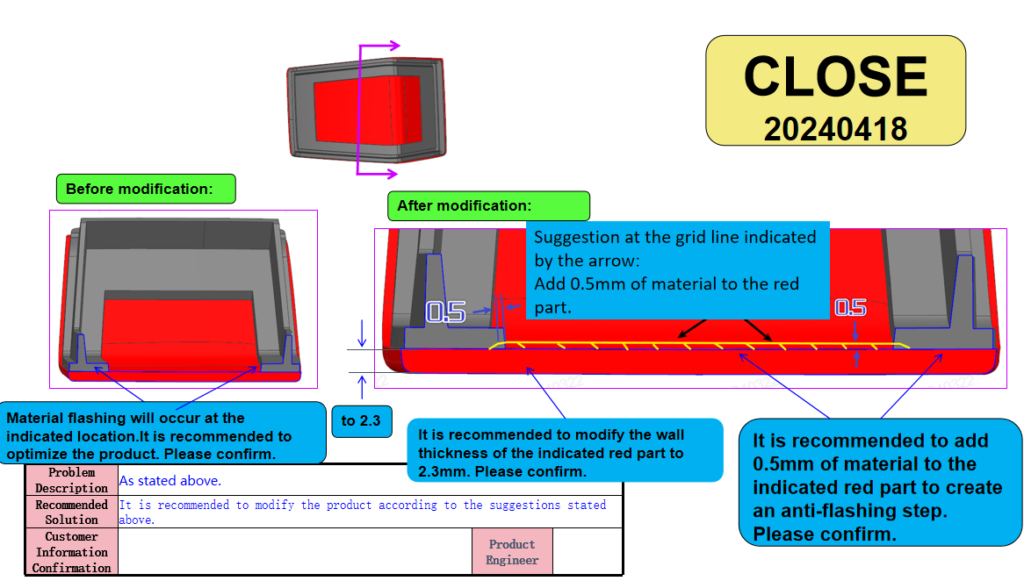
- Design anti-flashing steps or grooves at material transition areas.
- Ensure proper seal-off surfaces with sufficient width and fit.
- Optimize injection sequence and valve gate timing.
- Control melt temperature and pressure to prevent breakthrough.
- Accept minor flashing in non-visible areas if unavoidable.
Mold strength design
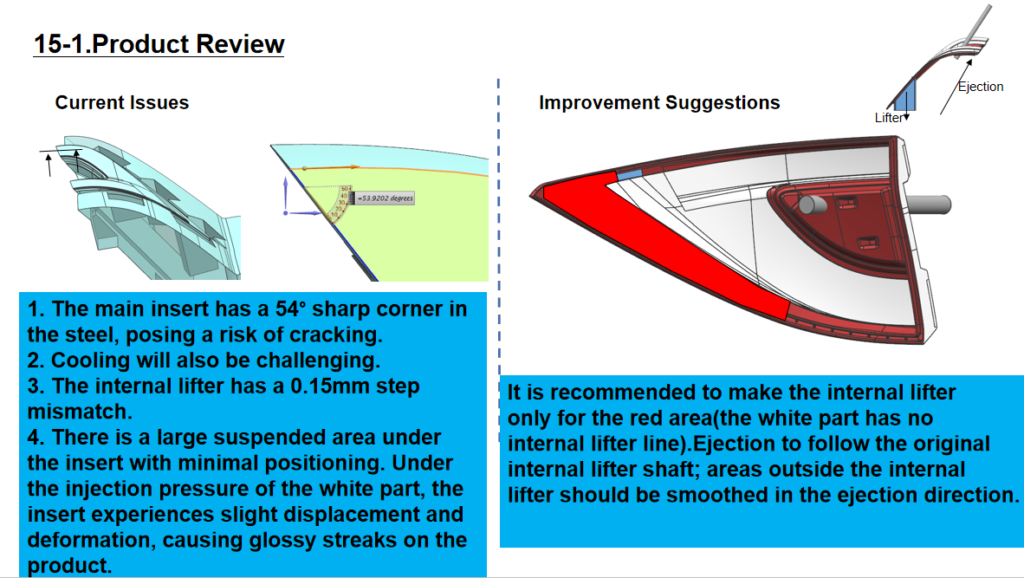
- Avoid sharp corners and thin steel sections (<2mm) to prevent cracking.
- Ensure sufficient steel thickness around slides, lifters, and inserts.
- Add support ribs behind core pins and thin-walled areas.
- Design adequate seal-off width (≥3mm) to resist injection pressure.
- Position ejector pins away from thin steel to avoid deformation.
- Consider cooling channels without compromising steel strength.
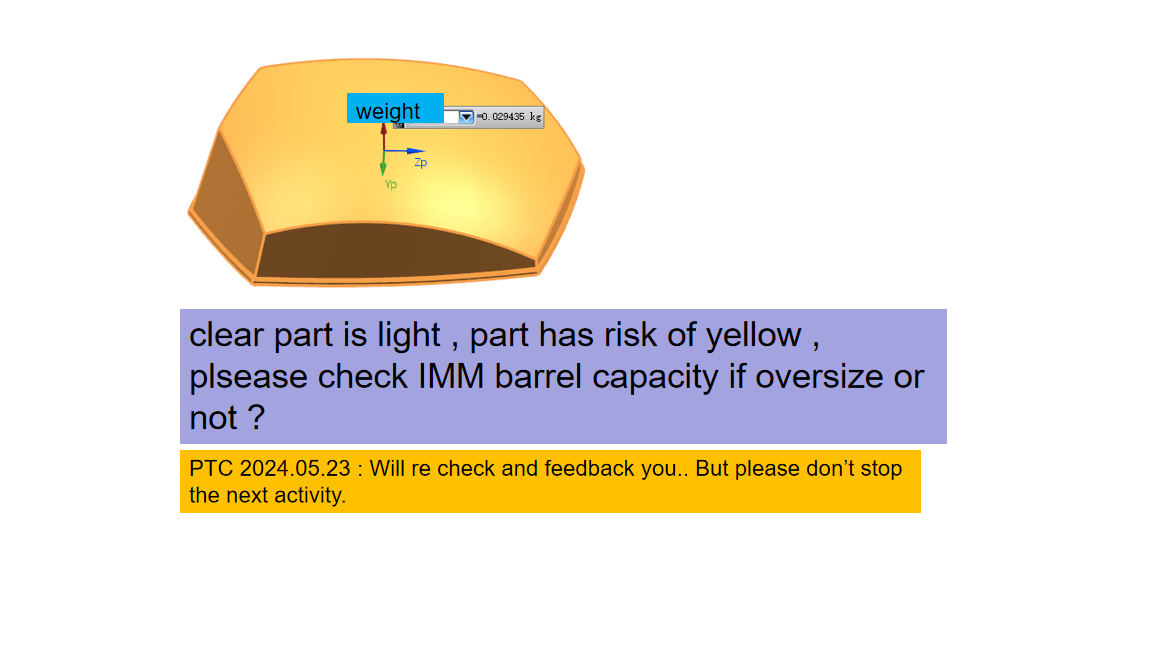
Injection molding machine compatibility
- Ensure shot volume is within machine injection capacity.
- Verify clamping force exceeds projected area × cavity pressure.
- Check mold dimensions fit within machine tie-bar spacing.
- Confirm ejector stroke is sufficient for part removal.
- Match nozzle contact type and locating ring size.
- Ensure machine plasticizing capacity meets cycle time requirements.
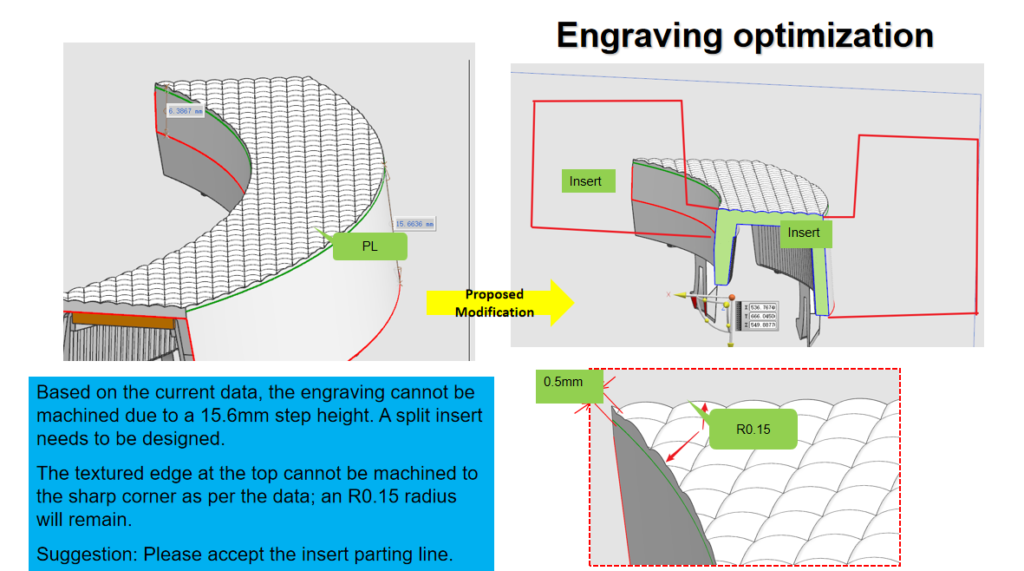
Engraving optimization
- Match draft angle with texture depth to prevent surface drag.
- Avoid placing texture on parting lines or insert splits; if unavoidable, design split inserts and accept witness lines.
- Provide smooth transition zones (0.1–0.2mm) at texture boundaries to prevent irregular gloss.
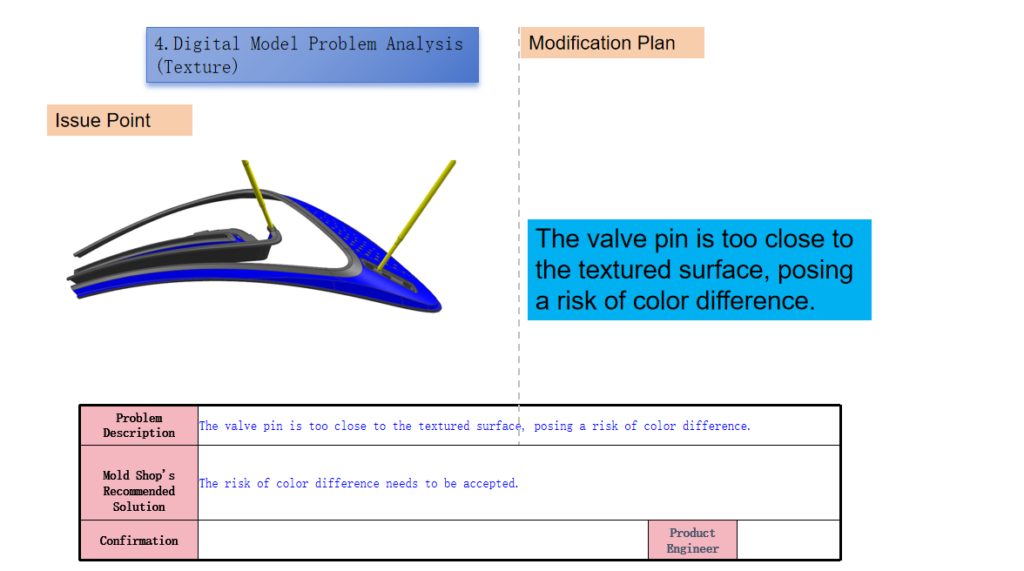
Engraving optimization
- Match draft angle to texture depth to prevent surface drag.
- Avoid texture on parting lines or insert splits; if unavoidable, design split inserts.
- Add 0.1–0.2mm transition zones at texture boundaries to prevent gloss variation.
- Ensure sufficient root radii for texture continuity on ribs/bosses.
- Position texture away from ejector pins or gate areas to avoid distortion.
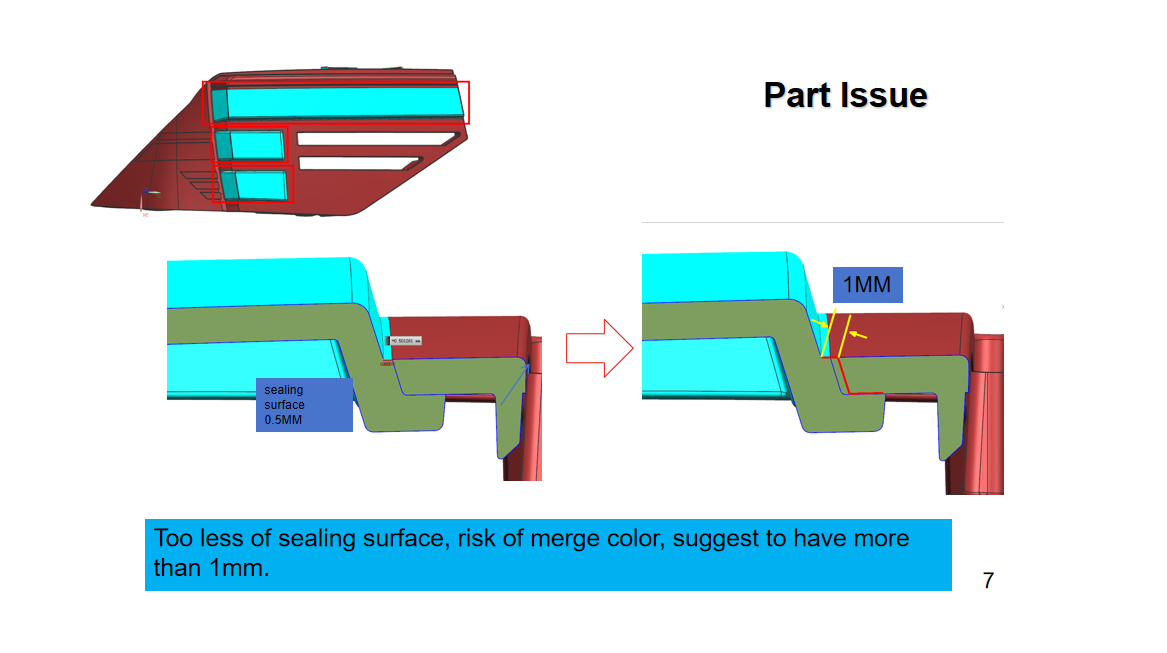
Sealing surface optimization
- Seal-off width: Design minimum 3–5mm contact surface to ensure effective sealing.
- Anti-flashing groove: Add 0.5–1mm deep step at material interface to physically block flash.
- Matching precision: Control mating surface tolerance within 0.02–0.05mm to eliminate gaps.
- Steel thickness: Avoid thin steel below 2mm near seal-off to prevent cracking.
- Parting direction: Optimize seal-off surface orientation to avoid direct melt pressure impact.
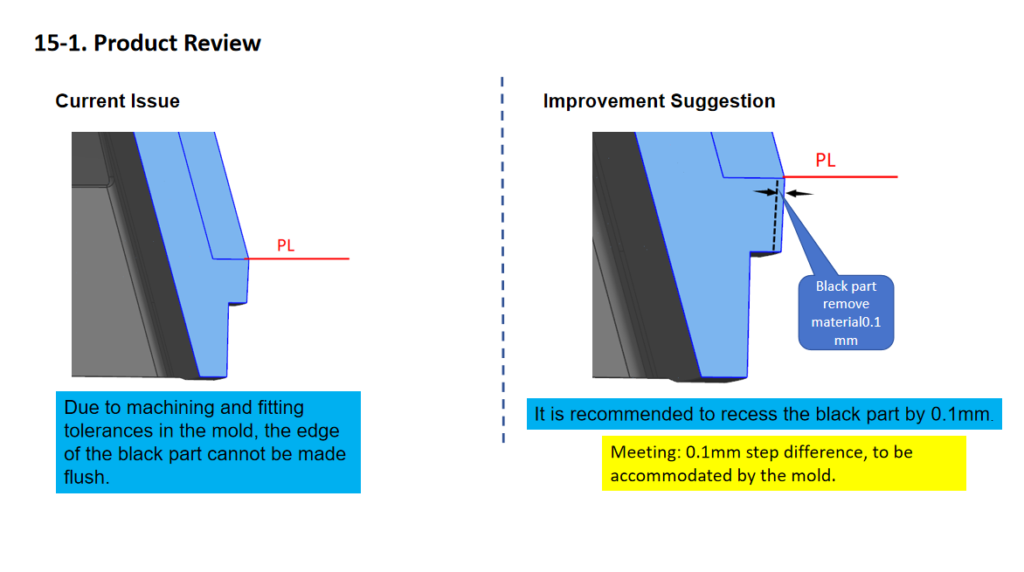
Flush control optimization
- Define step direction (core/cavity offset) to avoid reverse mismatch.
- Add cosmetic grooves or stepped parting lines to hide witness lines.
- Optimize wall thickness and rib layout to reduce deformation.
- Accept minor steps in non-critical areas if unavoidable.
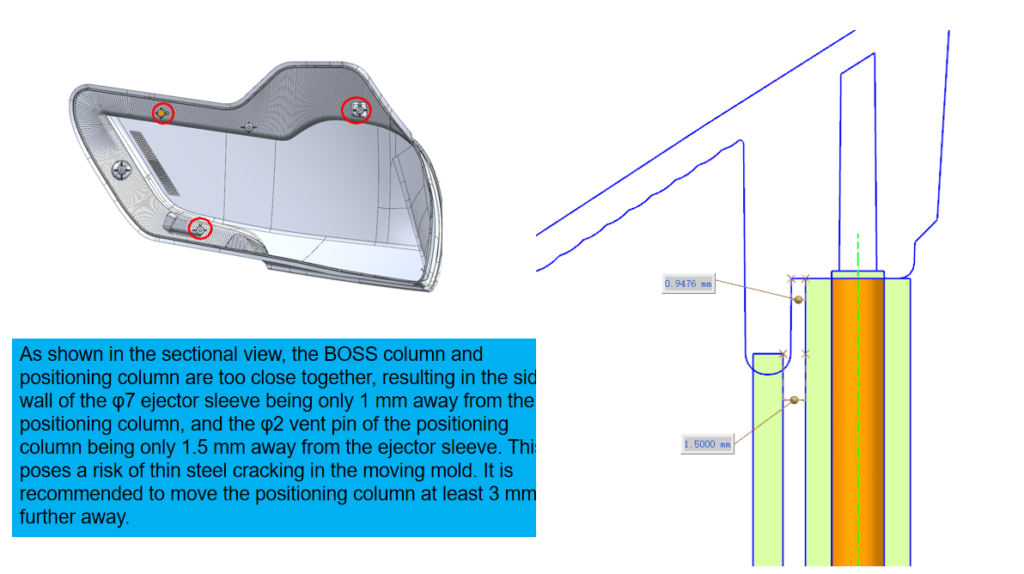
Ribs and Boss columns optimization
- Keep rib thickness at 40–60% of nominal wall to prevent sink marks.
- Add counterbores (volcano holes) at boss bases for material reduction.
- Use gussets or increase root radius for structural strength.
- Ensure sufficient draft angle for ejection.
- Avoid thin steel sections in mold design.
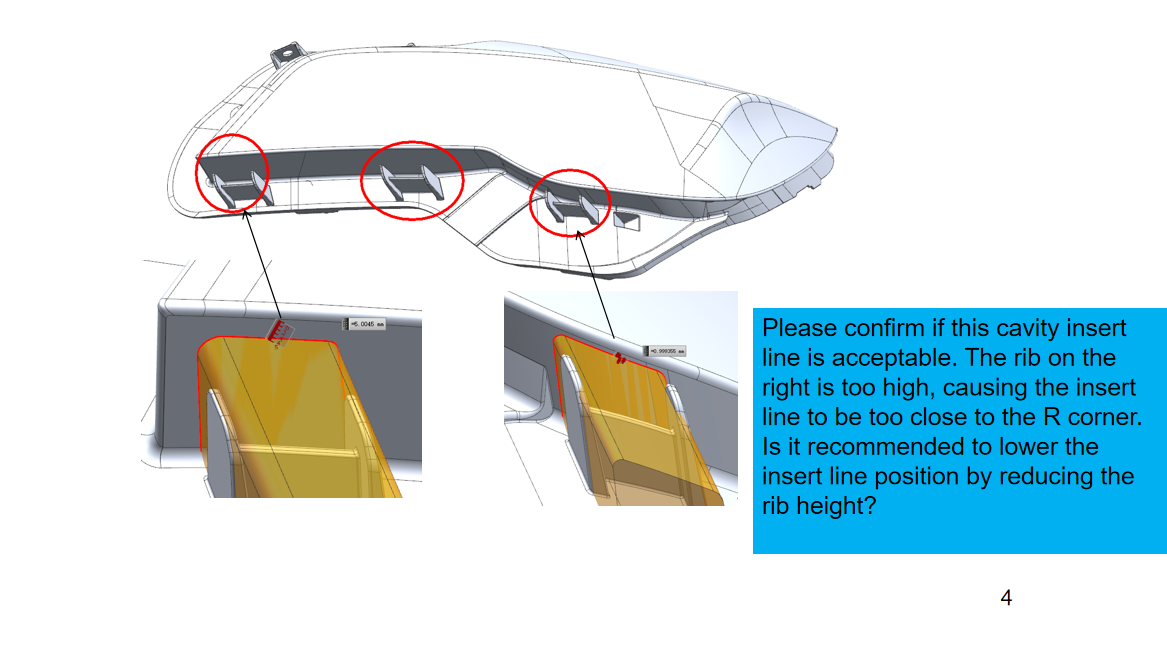
Witness line optimization
- Relocate parting lines to non-visible or textured areas.
- Add cosmetic grooves or stepped features to conceal lines.
- Control step mismatch direction (core/cavity offset) to avoid reverse steps.
- Polish mold surfaces to minimize visible lines.
- Accept witness lines in non-critical areas if unavoidable.
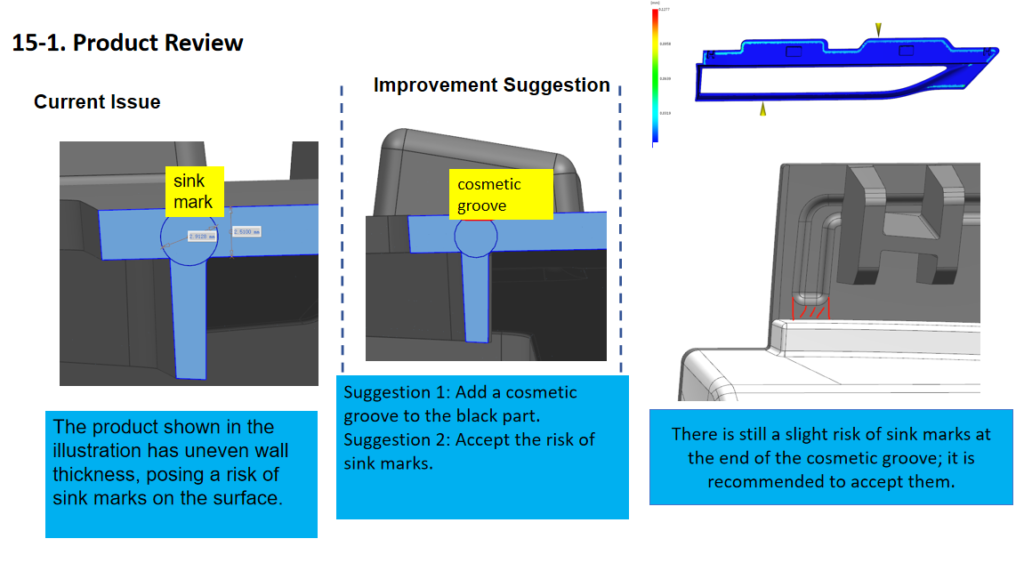
Sink mark risk
- Homogenize wall thickness; avoid sudden thickness changes.
- Optimize rib/boss design with counterbores or material reduction.
- Adjust process parameters (packing pressure, cooling time).
- Position gates near thick areas for effective packing.
- Accept minor sink marks if unavoidable in non-visible areas.
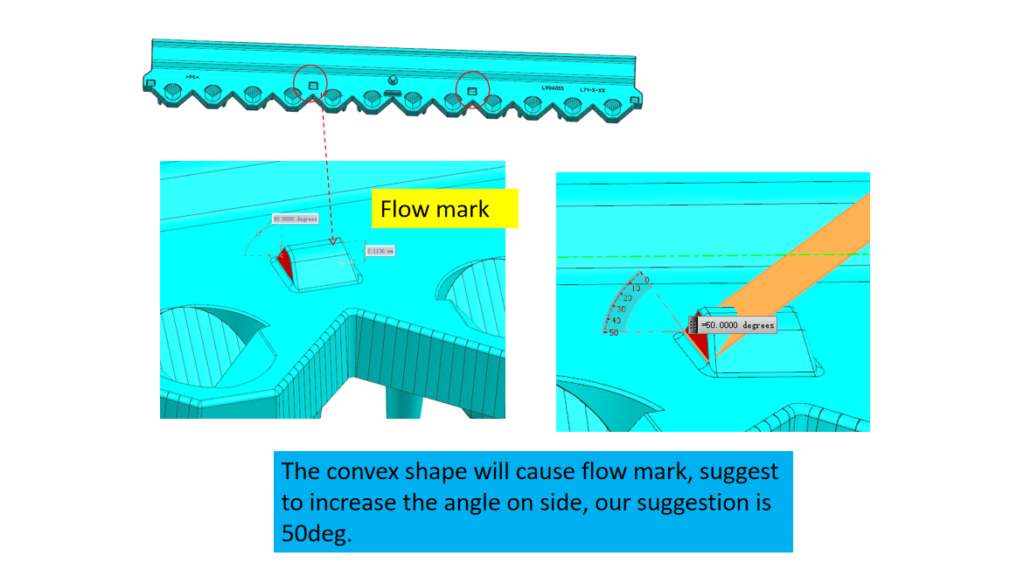
Flow mark risk
- Optimize gate location and size for smooth melt flow.
- Increase injection speed and mold temperature.
- Avoid abrupt wall thickness changes and sharp corners.
- Use sequential valve gating to control flow fronts.
- Ensure adequate venting to prevent gas interference.
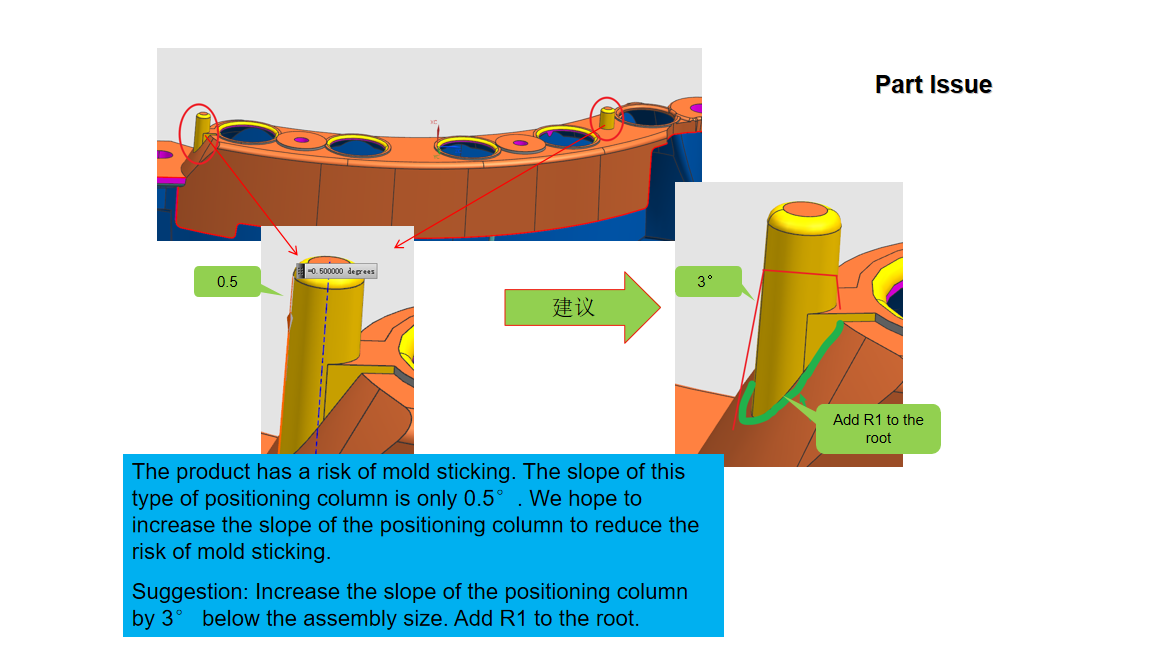
Mold sticking risk
- Ensure sufficient draft angles on all vertical walls.
- Avoid undercuts; if unavoidable, design slider or lifter.
- Add ribs or recessed features on large flat surfaces to break vacuum.
- Polish or texture surfaces appropriately to control adhesion.
- Optimize ejection system layout for balanced force distribution.
- Avoid sharp corners or excessive surface roughness in deep cavities.
Shrinkage and warpage
- Maintain uniform wall thickness to ensure even cooling and shrinkage.
- Use ribs instead of thick sections for stiffness; keep rib thickness at 40–60% of nominal wall.
- Add large radii at corners to reduce stress concentration.
- Optimize gate location for balanced filling.
- Design symmetrical geometry to balance shrinkage forces.
- Add counterbores at boss bases to reduce local mass.
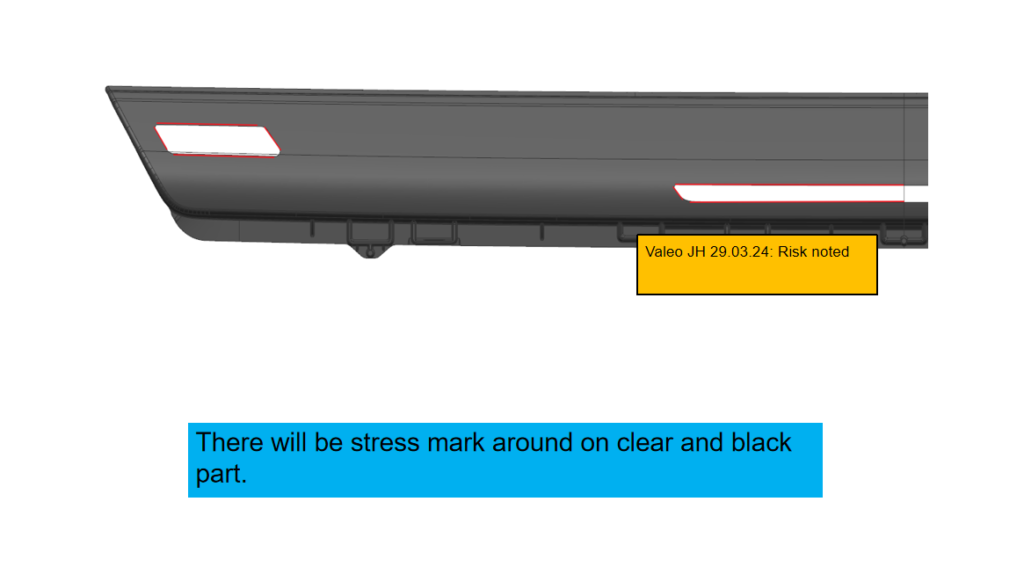
Stress mark risk
- Maintain uniform wall thickness to prevent uneven shrinkage.
- Use generous radii at all corners to reduce stress concentration.
- Optimize rib thickness to 40–60% of nominal wall.
- Add counterbores at boss bases to relieve local stress.
- Avoid sharp transitions and abrupt geometric changes.
- Consider texture to mask minor stress marks if unavoidable.
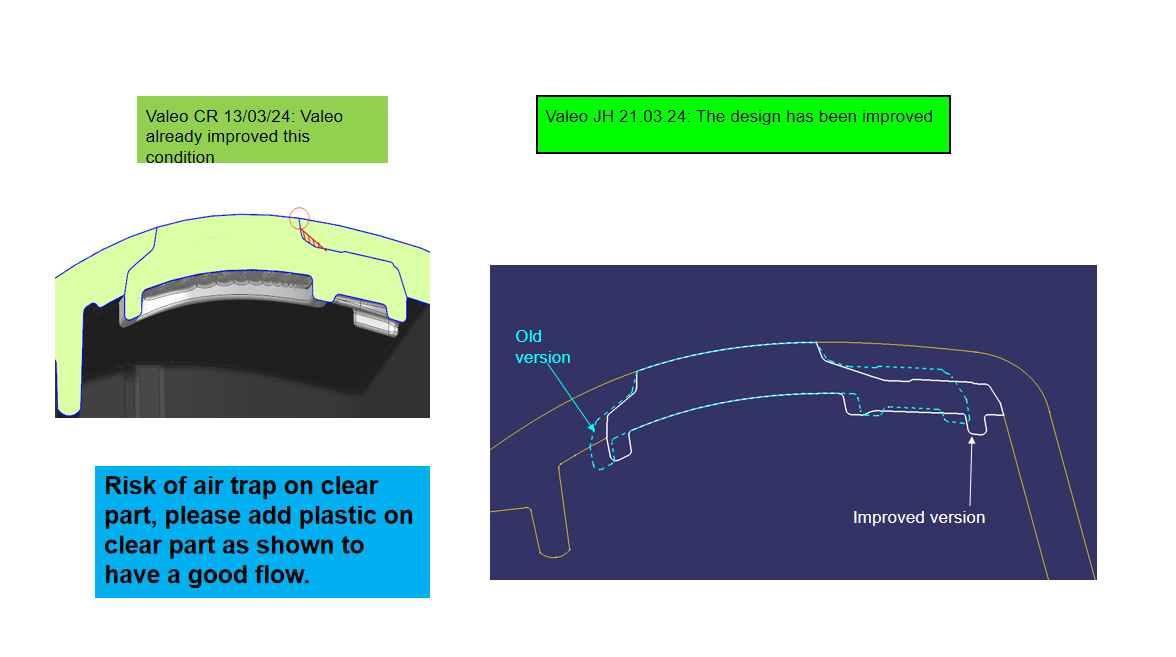
Gas trap risk
- Optimize wall thickness for uniform melt flow to avoid dead spots.
- Add venting channels at rib ends and deep cavities.
- Design ejector pins or inserts at gas-prone areas for natural venting.
- Adjust rib layout to align with melt flow direction.
- Use simulation to identify and modify problematic geometries.
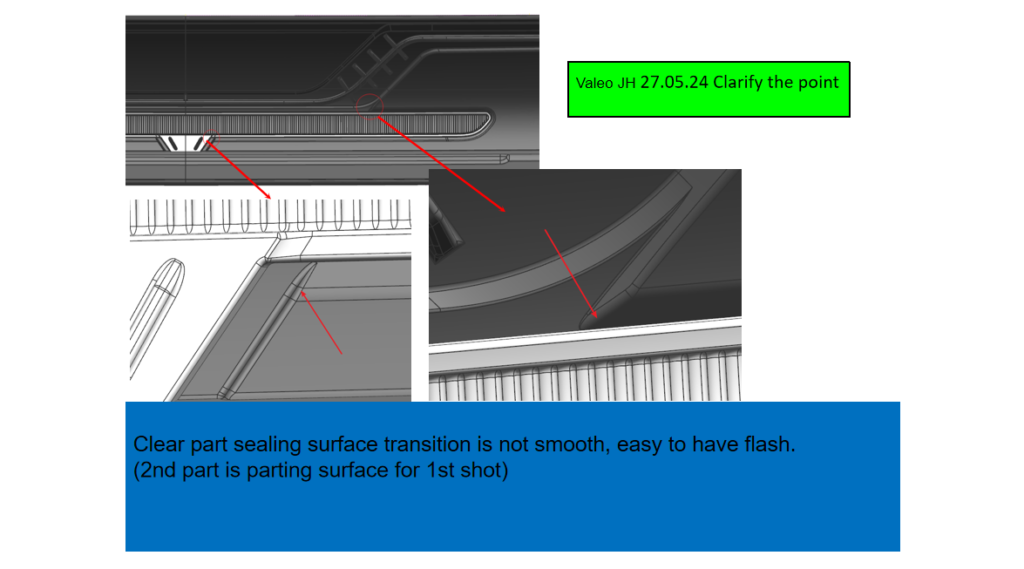
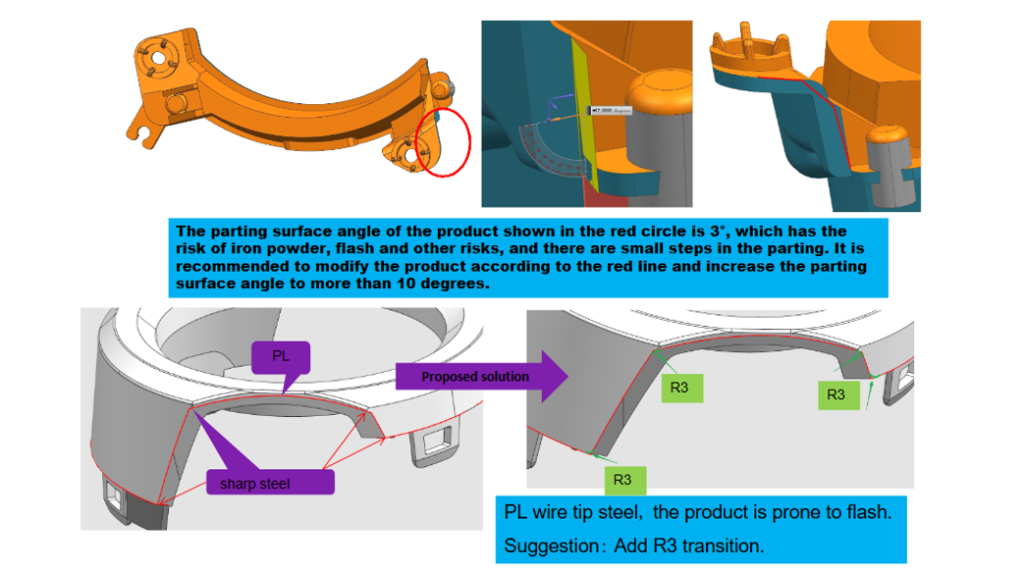
Flash risk
- Design robust parting lines with sufficient seal-off width (≥3mm).
- Avoid sharp corners on parting surfaces; add radii for better fit.
- Ensure uniform wall thickness to prevent localized overpacking.
- Optimize rib/boss layout to reduce stress on parting lines.
- Add support ribs near parting lines to resist mold deflection.
- Use simulation to identify potential flash areas and modify geometry.
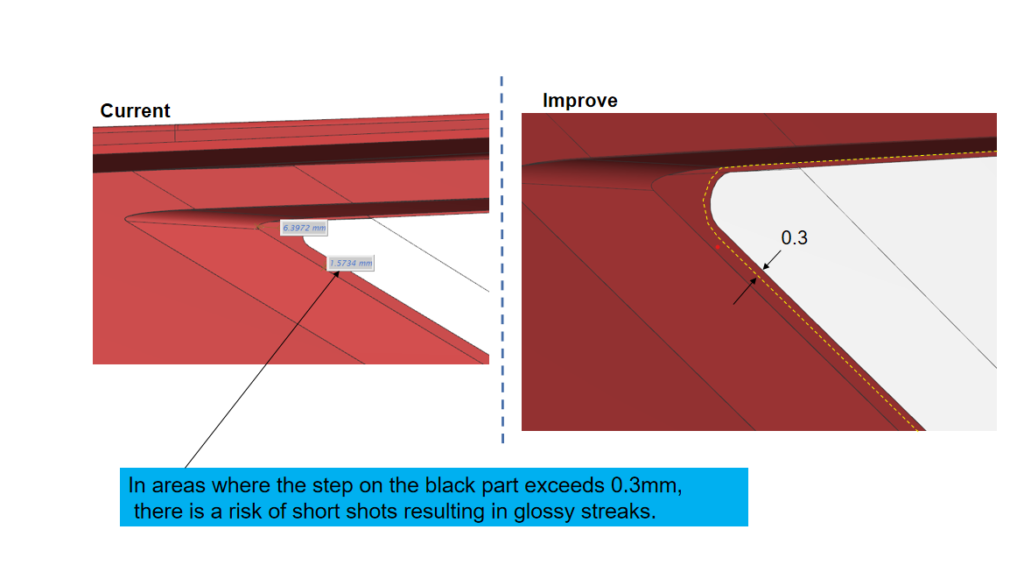
Glossy streaks risk
- Ensure balanced melt flow by optimizing gate location and wall thickness.
- Avoid abrupt flow interruptions; use sequential valve gating if needed.
- Increase injection speed to prevent slow flow fronts.
- Provide adequate venting to avoid gas burns.
- Adjust mold temperature for uniform surface gloss.
- Consider texture to mask minor streaks if unavoidable.
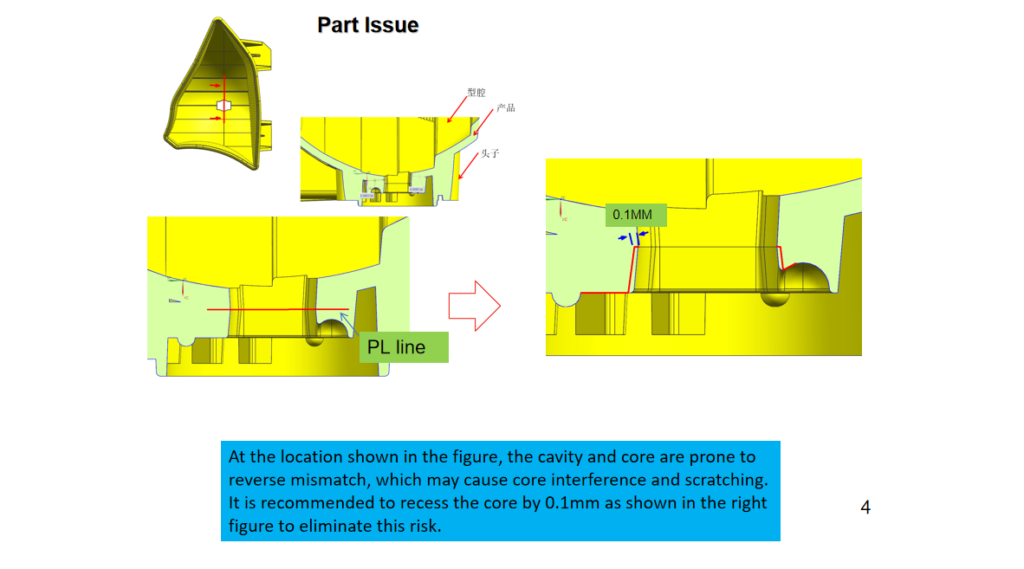
Scratching risk
- Add fillets or chamfers to all sharp corners and edges.
- Optimize parting line location to non-contact areas.
- Control flash and step mismatch within acceptable limits.
- Use texture or polishing to soften edge feel.
- Accept minor sharpness in non-handling zones if unavoidable.